A symbol becomes useful when you name what is visible before assigning a meaning. The three examples here use Mystic Veil illustrations. They are not historical Rider–Waite–Smith reproductions: editions can change a figure, animal, colour or setting. Check the actual card in your hand rather than importing a detail from another deck.
Three images, three different uses of light
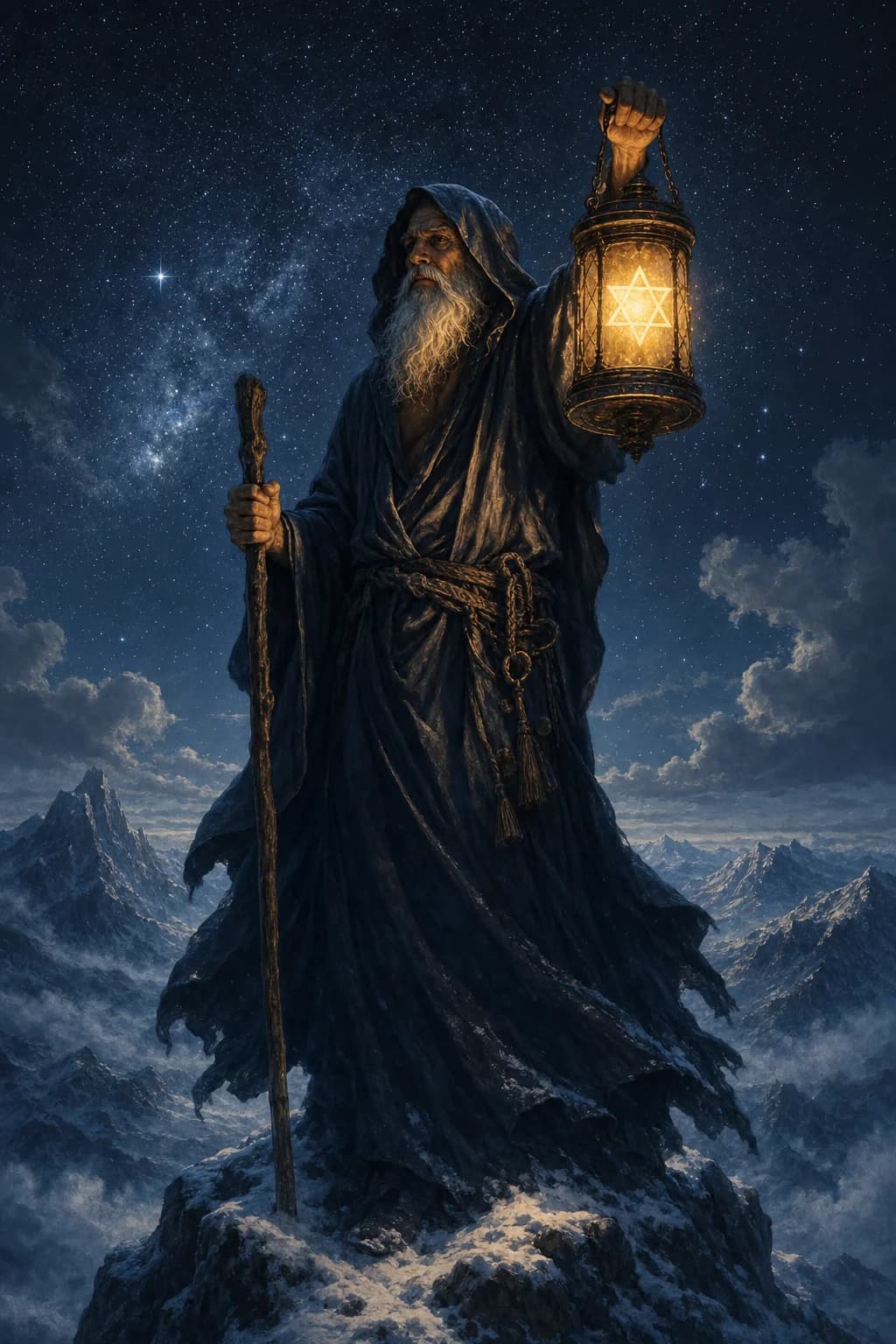
The Hermit
A gold lantern with a six-pointed star stands out against a dark blue sky. A hooded figure carries a staff above snowy mountain ground.
The small light can suggest a limited but usable guide: one criterion is enough for the next step. Alternatively, it can show attention narrowing too much. Dark blue can evoke quiet or distance; it does not automatically mean calm.
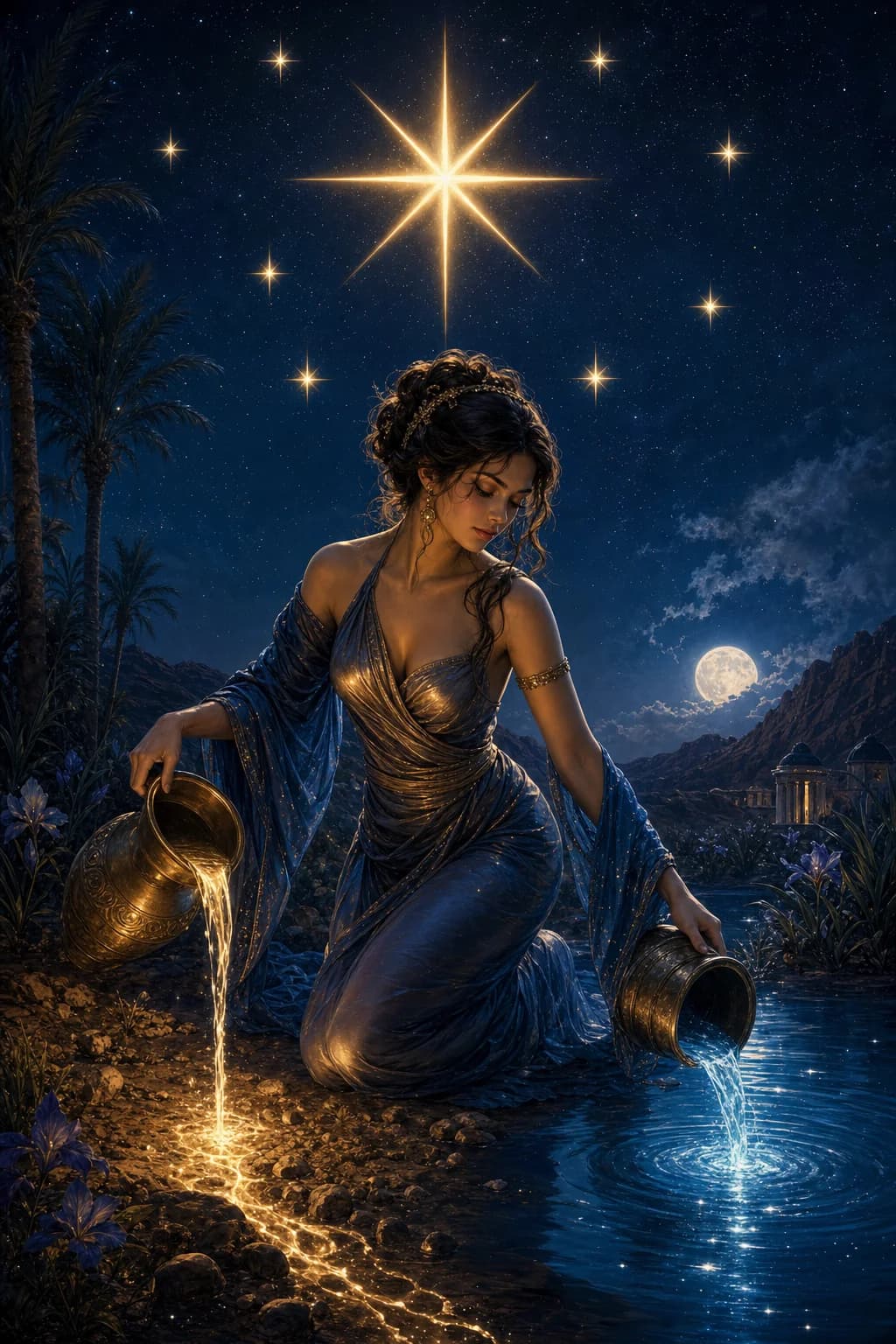
The Star
A large gold star shines above a clothed woman holding two vessels. One stream reaches the earth; the other reaches the water. The sky and water are dark blue.
The two streams can prompt a comparison of where time or energy goes. They can suggest balanced replenishment or divided attention. The distant star supplies a different kind of reference from the carried lantern; gold does not have to mean money.
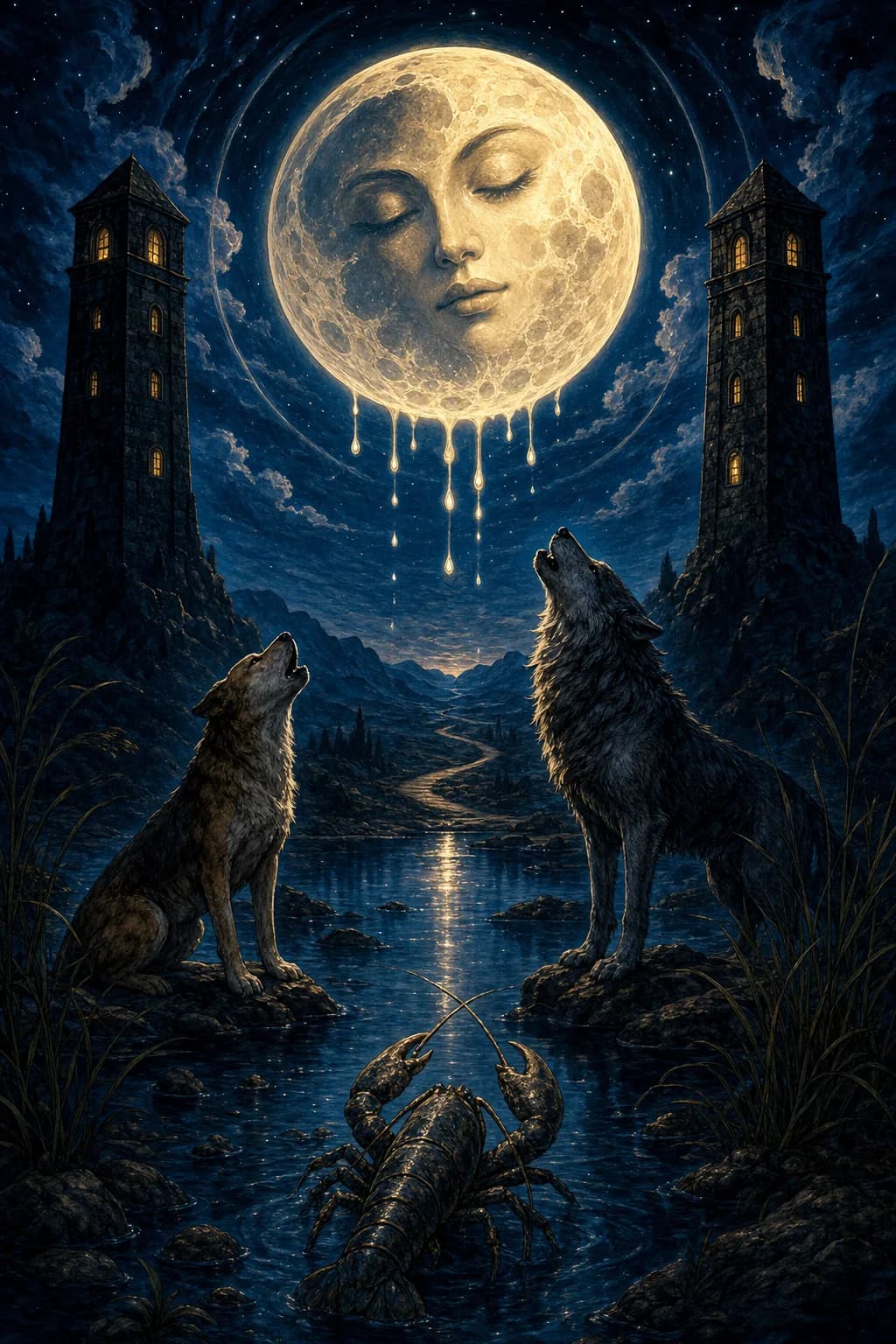
The Moon
A gold lunar disc has a face. Two wolves stand between two towers, with a crayfish in the foreground water and a winding path beyond them.
The path can suggest a route whose details remain unclear. The alert animals can mirror the reader's own watchfulness; they do not establish an external threat. Warm gold appears here too, so the surrounding scene matters more than a fixed colour dictionary.
A completed example: comparing a course
Suppose you are deciding whether a course fits your week. Read The Hermit as the criterion, The Star as the allocation of resources and The Moon as the missing information. The lantern becomes “I need feedback on my own work”; the two streams become the split between live lessons and independent practice; the path becomes an unknown timetable. These are associations chosen for these positions, not facts discovered by the cards. The finished enquiry is: “Before I enrol, how many live hours are required each week, and will the tutor comment on one piece of my work?” Once the provider replies, compare the answer with your calendar. A second card cannot replace that reply.
Where the tradition changes
Waite's own descriptions help identify differences: his Star figure is unclothed and his Moon has a dog and a wolf. These Mystic Veil images show a clothed figure and two wolves. The older text is a reference for that particular deck, not a licence to describe every edition identically. For the original descriptions, see The Hermit, The Star and The Moon in The Pictorial Key to the Tarot. Your personal association is useful when labelled as such; it need not become a universal rule.
Which visible detail supports my interpretation, and what other reading could the same detail support?
Try this question in the reading guide.
Tarot Intuition or Guidebook? How to Compare Your Interpretation · Rider–Waite–Smith, Marseille and Thoth: Comparing Tarot Decks